Author: admin

  • OVENTE Electric Deep Fryer FDM2201BR: Features, Cooking Uses, and a Practical Guide for Home Kitchens

    OVENTE Electric Deep Fryer FDM2201BR: Features, Cooking Uses, and a Practical Guide for Home Kitchens

    Introduction

    Deep-fried foods have a familiar place in many home kitchens. French fries, onion rings, chicken tenders, breaded fish, and other fried favorites can be prepared at home when the right equipment and cooking techniques are available. However, deep-frying on a stovetop requires close attention to oil temperature, the depth of the cooking vessel, and the safe handling of hot oil. An electric deep fryer combines several of these elements in one appliance, offering a different approach to preparing fried food.

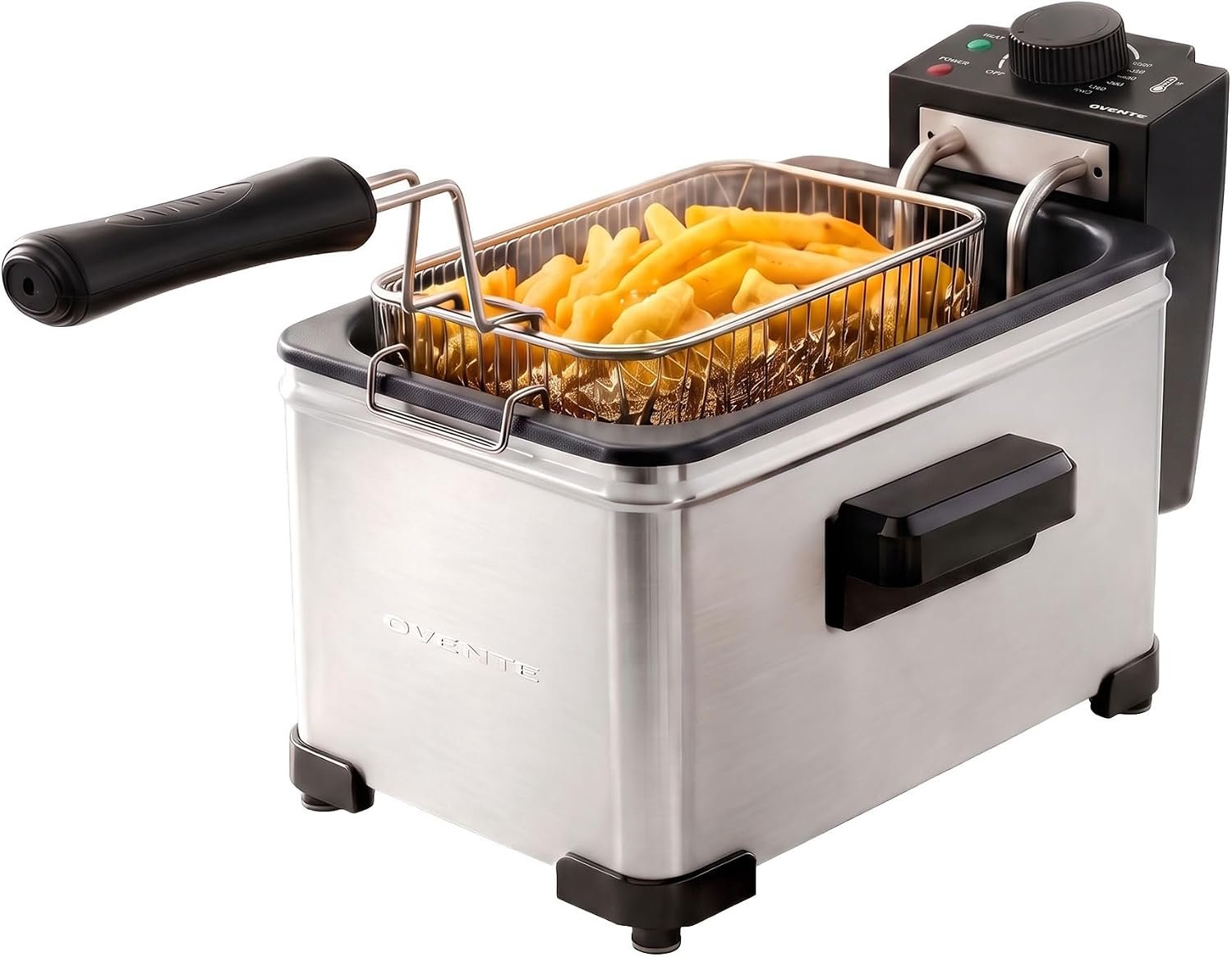
    The OVENTE Electric Deep Fryer FDM2201BR is a compact electric fryer identified in its product name as having a 2-liter capacity and a 1,500-watt heating system. Its silver finish gives it a conventional countertop-appliance appearance, while its electric design is intended for household deep-frying rather than relying on a stove burner.

    For people who prepare fried food occasionally, an appliance of this general size may provide a dedicated place to heat oil and cook smaller portions. It can also help separate deep-frying from other cooking activities, which may be useful in kitchens where a stovetop is already occupied. Still, the capacity and power rating alone do not establish how quickly a particular batch will cook, how many servings the fryer can handle, or whether it will fit every household’s needs.

    It is useful to understand what a 2-liter electric fryer can offer, what its limitations may be, and how to use it responsibly. Features such as temperature adjustment, a frying basket, a removable oil container, a lid, or indicator lights can affect the cooking experience, but the exact configuration should always be confirmed through the current product listing and manufacturer’s instructions.

    This guide explores the advertised capacity and power of the OVENTE FDM2201BR, explains how electric deep fryers work, outlines suitable cooking applications, and discusses the factors worth considering before adding one to a kitchen.

    Key Features of the OVENTE Electric Deep Fryer

    The OVENTE FDM2201BR is identified by its model number, 2-liter capacity, 1,500-watt power rating, and silver finish. Its broader purpose is to provide a dedicated electric appliance for cooking foods in hot oil.

    Each specification has practical implications, but it is important to distinguish between information stated in the product name and additional features that must be verified in the listing.

    1. Two-Liter Capacity

    The stated 2-liter capacity is one of the first details to consider when evaluating this electric deep fryer.

    Capacity affects the amount of oil the appliance can hold and, depending on the manufacturer’s specifications, the quantity of food that can be prepared in a batch. A compact fryer may be suitable for smaller servings, side dishes, snacks, or meals for a limited number of people.

    However, a 2-liter capacity should not automatically be interpreted as permission to fill the appliance with exactly 2 liters of oil. Manufacturers commonly distinguish between the overall capacity of a container and its recommended maximum oil level. Food displaces oil when it enters the fryer, and excessive filling can cause bubbling or overflow.

    The safe oil level should always be determined by the fill markings and instructions supplied with the appliance. If the fryer includes minimum and maximum oil indicators, those markings should take precedence over estimates based on the stated capacity.

    The practical cooking capacity also depends on the food itself. Thin potato strips, small breaded pieces, and larger chicken portions occupy different amounts of space and may require different batch sizes. Frozen foods can create additional temperature changes and should be prepared according to the package instructions.

    For households that usually cook small quantities, a compact fryer may be easier to manage than a large-capacity appliance. People who regularly prepare food for several guests, however, should consider whether cooking multiple batches would become inconvenient.

    2. A 1,500-Watt Heating System

    The product name specifies a 1,500-watt power rating. Wattage indicates the electrical power the appliance is designed to use under its rated operating conditions.

    In general, a higher-powered heating system can provide more heating energy than a lower-powered system, all else being equal. That can influence how the oil heats and how quickly it recovers after food is added. Nevertheless, wattage alone cannot predict the exact preheating time or cooking performance of an individual fryer.

    Other factors include the amount of oil, the starting temperature of the ingredients, the appliance’s thermostat, the design of its heating element, and the surrounding room conditions.

    When cold food enters hot oil, the oil temperature drops. A fryer needs to supply enough heat to bring the oil back toward its target temperature. Adding too much food at once can produce a larger temperature drop, even in a relatively powerful appliance.

    The 1,500-watt rating also matters when planning electrical use. The fryer should be connected to an outlet that meets the manufacturer’s electrical requirements. Avoid using damaged cords, overloaded extension leads, or outlets that are unsuitable for a heating appliance.

    For buyers outside the United States, voltage compatibility deserves particular attention. A 1,500-watt appliance designed for a 120-volt supply should not be assumed to work safely on a 220–240-volt household supply. Check the rating label and manufacturer guidance before connecting it to an outlet, and do not rely on a simple plug adapter to resolve a voltage mismatch.

    3. Electric Operation

    An electric deep fryer heats its oil using an internal heating system rather than a gas flame or an electric stove burner.

    This arrangement gives the appliance a dedicated cooking function. The user does not need to reserve a stovetop burner for the entire frying process, which may help when preparing a meal with several components.

    Electric fryers also commonly incorporate controls that allow the user to select a desired temperature. The exact controls available on the FDM2201BR should be checked in the current product documentation rather than inferred from the general category.

    An electric design does not eliminate the need for supervision. Oil can become dangerously hot if misused, and the appliance should be operated on a stable, heat-resistant surface with adequate space around it.

    The cord should be positioned so that it cannot be pulled accidentally or contact hot surfaces. Keep the fryer away from the edge of the counter, and do not place it where it could be knocked over during food preparation.

    4. Adjustable Temperature Settings

    Temperature management is central to successful deep-frying. The right oil temperature helps food cook at an appropriate rate while developing the expected color and texture.

    If the FDM2201BR’s temperature controls are adjustable, they allow the user to select a setting appropriate for the recipe. Check the product listing or manual for the available range and how the controls are intended to be used.

    Many deep-frying recipes use oil temperatures in the general range of 325°F to 375°F (163°C to 191°C). This is a broad reference for common frying techniques, not a verified operating range for this particular model. The appliance’s actual temperature limits and the recipe’s instructions should take priority.

    Oil that is too cool may leave food greasy or produce a soft coating. Oil that is too hot can brown the exterior too quickly, leaving the inside undercooked. Excessive heating can also cause the oil to smoke and increase the risk of fire.

    Temperature adjustment is useful only when it is combined with sensible batch sizes and appropriate cooking times. Adding a large quantity of cold or frozen food may lower the oil temperature sharply, so cooking in smaller batches can help maintain more consistent conditions.

    5. Frying Basket and Food Handling

    Many electric deep fryers use a basket to lower food into hot oil and lift it out after cooking. A basket can make it easier to handle small pieces of food while allowing oil to drain through its openings.

    The exact basket design and included accessories for the OVENTE FDM2201BR should be verified in the current listing. If a basket is included, use it within the manufacturer’s recommended load limits and follow the instructions for attaching or positioning its handle.

    Avoid overfilling the basket. Crowded food may cook unevenly, and pieces that are packed tightly together can interfere with oil circulation.

    When lowering food into hot oil, move carefully and avoid dropping ingredients from a height. Allow excess oil to drain over the fryer in accordance with the manufacturer’s instructions before moving the food to a serving plate or rack.

    The basket and its handle may remain hot after cooking. Use the designated grip and avoid touching metal sections that have been exposed to hot oil.

    6. Exterior Finish and Countertop Placement

    The FDM2201BR model name identifies a silver finish. Color is mainly an appearance consideration, but the appliance’s exterior construction also matters when planning its position and cleaning routine.

    An electric fryer should sit on a stable, level surface that can tolerate the surrounding heat. Maintain the clearances specified by the manufacturer and keep it away from curtains, paper towels, packaging, and other combustible materials.

    Do not place the fryer directly beneath cabinets or shelves unless the instructions explicitly permit that arrangement. Steam and heat may affect nearby surfaces, while restricted airflow can interfere with safe operation.

    The exterior should be cleaned according to the manual. Never immerse an electric control assembly, power cord, or plug in water unless the manufacturer explicitly identifies the component as safe for that treatment.

    7. Additional Features to Verify

    Before making a purchasing decision, review the current listing for details about the following features:

    • Whether the oil container is removable for cleaning.
    • Whether the fryer includes a lid and how it should be used.
    • Whether there are power or heating indicator lights.
    • The available temperature settings and maximum operating temperature.
    • The recommended minimum and maximum oil levels.
    • The dimensions of the appliance and the amount of countertop space required.
    • Whether the basket, oil container, or other components have special cleaning instructions.
    • The electrical voltage and frequency for the specific version being sold.

    These details can make a meaningful difference to everyday convenience. They should be confirmed from the actual product documentation rather than assumed from the fact that the appliance is an electric deep fryer.

    How the OVENTE Electric Deep Fryer Can Be Used

    A compact electric deep fryer can support a range of recipes, provided the food is suitable for immersion frying and the appliance’s capacity is sufficient.

    The examples below describe general cooking applications. Actual temperature settings, batch sizes, and cooking times should be based on the manufacturer’s instructions and the recipe being prepared.

    Preparing Homemade French Fries

    French fries are among the familiar uses for a household deep fryer.

    The method begins with choosing suitable potatoes and cutting them into pieces of a reasonably consistent size. Consistent pieces tend to cook more evenly, while very thick and thin pieces mixed together may finish at different times.

    If the potatoes are washed or soaked after cutting, remove excess surface moisture before frying. Water can cause hot oil to splatter, so drying the pieces carefully is an important safety step.

    Some recipes use a two-stage frying process to develop a cooked interior and a crisp exterior. Others use a single-stage method. The appropriate approach depends on the potato variety, thickness, and desired result.

    Avoid filling the basket with too many potatoes at once. Excessive quantities can lower the oil temperature and leave the fries unevenly cooked. Smaller batches may take more time overall, but they are often easier to control.

    When the fries are ready, lift the basket carefully if the model includes one, allow excess oil to drain, and transfer the food to a suitable serving surface.

    Cooking Frozen French Fries and Snacks

    Frozen fries, potato wedges, and similar products can be convenient for quick meals. However, frozen ingredients may cause a more noticeable change in oil temperature and can produce splattering if ice or excess moisture is present.

    Read the food packaging before frying. Some frozen products are designed primarily for oven or air-fryer preparation, while others provide specific deep-frying instructions.

    Do not add food covered in loose ice crystals or excess surface water. Avoid thawing products in a way that leaves them wet immediately before frying.

    Cook manageable portions and follow the package’s recommended method, adjusting only when the appliance’s instructions allow it. The basket should not be overloaded, and the food should be removed carefully once it reaches the required color and texture.

    Frying Chicken Tenders and Small Chicken Pieces

    Breaded chicken tenders, small chicken pieces, and selected boneless portions can be prepared in a deep fryer when the appliance’s dimensions and capacity allow safe handling.

    Chicken requires special attention because the outside can brown before the center is fully cooked. A golden coating is not a reliable indication of internal doneness.

    Use a recipe intended for deep-frying, and prepare the chicken according to appropriate food-safety practices. Keep raw chicken separate from ready-to-eat ingredients, wash hands and utensils after handling it, and avoid reusing surfaces that have contacted raw poultry without cleaning them properly.

    Cook in manageable batches and monitor the oil temperature. Use a food thermometer to verify that poultry reaches an internal temperature of 165°F (74°C), measured in the thickest part without touching bone.

    Larger bone-in portions may be difficult to cook evenly in a compact fryer and may require a different cooking method. Always consider the size and thickness of the food rather than assuming that every chicken recipe will fit the appliance.

    Making Onion Rings

    Onion rings can be prepared by coating onion slices in batter or breadcrumbs and frying them until the coating is cooked and crisp.

    Choose slices of a reasonably consistent thickness to help them cook at a similar rate. If using a wet batter, allow excess coating to drip off before adding each piece to the oil.

    Cook only a few pieces at a time if the basket is small. Overcrowding can cause the coating to stick together and reduce the oil temperature.

    Remove the rings carefully and allow excess oil to drain before serving. Because battered foods can release small crumbs into the oil, removing loose particles between batches may help maintain oil quality.

    Preparing Breaded Fish and Seafood

    A compact fryer may be useful for fish fillets cut into smaller portions, breaded fish pieces, shrimp, and similar seafood dishes.

    Seafood often cooks relatively quickly, so it is important to use a recipe appropriate to the type and thickness of the ingredient. Delicate pieces may break apart if handled roughly, and wet coatings may separate if the oil temperature is unsuitable.

    Prepare the ingredients before switching on the fryer. Keep raw seafood separate from cooked food, use clean utensils, and follow suitable food-storage guidance.

    As with other fried dishes, avoid filling the basket too heavily. Smaller portions are easier to lower into the oil, turn or reposition when necessary, and remove when cooked.

    Cooking Vegetable Snacks

    Vegetable fritters, battered mushrooms, zucchini pieces, and similar snacks can also be prepared using deep-frying techniques.

    The moisture content of vegetables varies. Ingredients with high water content can cause more bubbling, so dry them as appropriate and follow a recipe designed for the particular vegetable.

    For battered vegetables, make sure the coating is evenly distributed without excessive drips. For fritters, keep the portions consistent and allow sufficient space between pieces.

    Not every vegetable dish benefits from deep-frying. Roasting, sautéing, steaming, or air frying may be more convenient when a recipe does not require a crisp, oil-fried exterior.

    Preparing Small Appetizers for Gatherings

    A 2-liter fryer may be useful when preparing modest quantities of appetizers, such as small breaded bites, selected frozen snacks, or vegetable pieces.

    Its usefulness for gatherings depends on how many servings are required and how quickly they need to be served. If the food must be prepared in many separate batches, the cooking process can take longer than expected.

    Plan the sequence before starting. Prepare ingredients in advance, have a safe draining area ready, and keep cooked food away from raw ingredients. If multiple batches are necessary, monitor the oil temperature between them and remove excessive crumbs when it is safe to do so.

    A Practical Guide to Using an Electric Deep Fryer

    Good results depend on preparation, temperature management, and safe handling. The following process provides a general framework for using a household electric fryer, but the manufacturer’s instructions should always take precedence.

    Step 1: Read the Manual and Inspect the Appliance

    Before the first use, read the instructions supplied with the specific model.

    Check the power cord, plug, controls, basket, and other accessible components for visible damage. Make sure the appliance is assembled correctly and that removable parts are installed as directed.

    Place it on a stable, level, heat-resistant surface with the required clearance around it. Keep it away from water sources, combustible materials, and areas where the cord could be pulled accidentally.

    Step 2: Add the Correct Amount of Oil

    Use a cooking oil suitable for the intended recipe and temperature. Different oils have different smoke points, flavors, and nutritional characteristics.

    Follow the minimum and maximum fill markings, if provided. Never fill the fryer to the top simply because its nominal capacity is 2 liters.

    The oil must have enough space to accommodate food and bubbling without overflowing. If the manual provides a specific oil capacity, use that figure rather than estimating the volume from the appliance’s exterior dimensions.

    Step 3: Select an Appropriate Temperature

    Set the temperature according to the recipe and the appliance’s permitted operating range.

    Allow the fryer to heat as directed. Do not assume that the indicator light, if one is present, means the oil has reached a particular temperature unless the manufacturer explains what that indicator represents.

    If temperature monitoring is available, use it as instructed. Avoid exceeding the appliance’s stated limits, and do not leave the fryer unattended while the oil is heating.

    Step 4: Prepare Ingredients Before Frying

    Prepare the food, utensils, draining surface, and serving dishes before adding anything to the oil.

    Remove excess water from ingredients where appropriate. If working with frozen food, follow the package instructions and avoid adding items covered in loose ice or excessive moisture.

    Keep children and pets away from the appliance. Avoid loose sleeves, dangling accessories, or anything that could come into contact with the fryer or hot oil.

    Step 5: Lower Food Carefully

    Place food into the basket, if included, without exceeding the manufacturer’s recommended load.

    Lower it into the oil carefully to reduce splashing. Avoid dropping food from a height, reaching into the fryer, or adding so much food that the oil bubbles excessively.

    Cook in batches that allow the food to move freely. The appropriate batch size depends on the shape of the food, the basket dimensions, and the manufacturer’s guidance.

    Step 6: Monitor Cooking Progress

    Use the recipe’s cooking time as a guide, but also consider the food’s size and internal doneness requirements.

    Do not rely solely on surface color. This is especially important for poultry, thick fish portions, and other foods that must reach a safe internal temperature.

    If the oil begins smoking, stop adding food and follow the manufacturer’s safety instructions. Turn off the appliance if it is safe to do so, and allow the oil to cool. Never continue heating oil in an attempt to reach a cooking result after it has begun smoking.

    Step 7: Remove Food and Drain Excess Oil

    Lift the basket carefully if the appliance includes one, and allow excess oil to drain according to the instructions.

    Move the food to a stable, heat-resistant plate or rack. Keep the serving area away from the appliance’s hot surfaces and make sure the food cannot be knocked onto the floor.

    Do not touch the heating element or other internal parts while the appliance is hot.

    Step 8: Switch Off and Cool the Appliance

    When cooking is complete, switch off the fryer and unplug it according to the manual. Allow the oil and appliance to cool in a safe location.

    Do not carry or pour hot oil unnecessarily. The risk of a spill increases when moving a container filled with hot liquid.

    Never pour oil into a sink or toilet. If the oil is suitable for reuse, strain and store it only after it has cooled sufficiently and using a suitable, clean, sealed container. Discard oil that has deteriorated.

    Step 9: Clean and Store It Properly

    Follow the manufacturer’s cleaning instructions. Some fryers have removable oil containers or baskets, while other components may require careful wiping rather than washing.

    Never immerse the powered base, electrical controls, cord, or plug in water unless the manufacturer specifically states that doing so is safe.

    Wait until all components are cool before cleaning. Dry parts thoroughly and reinstall them only as directed. Store the appliance in a dry place where the cord will not be crushed or damaged.

    Who May Find the OVENTE FDM2201BR Suitable?

    The appliance’s advertised capacity and power rating may make it relevant to several types of households, although suitability depends on the actual specifications and cooking routine.

    People Who Fry Food Occasionally

    Households that prepare fries, onion rings, or breaded snacks from time to time may appreciate having a dedicated electric fryer rather than heating oil in a pot on the stove.

    An electric appliance provides a separate cooking station, but it still needs countertop space, safe storage, and regular cleaning. People who fry only once or twice a year may find that an existing suitable pot or an alternative cooking method is sufficient.

    Small Households

    A 2-liter fryer may be worth considering for people who generally prepare smaller portions.

    The nominal capacity does not guarantee a specific number of servings, so buyers should compare the basket size and recommended batch quantity with the meals they normally cook.

    For a household that needs large quantities at once, a compact appliance may require repeated batches. That can increase preparation time and make it more difficult to serve everything at the same temperature.

    Apartment Kitchens

    People with limited cooking space may prefer a compact appliance over a larger deep fryer. However, the actual dimensions of the FDM2201BR should be checked before assuming it will fit easily on a countertop or in a cupboard.

    The fryer also needs adequate clearance while operating. It should not be placed in a cramped space merely to keep it out of the way.

    If countertop space is particularly limited, consider how often the fryer will be used and whether storing it between cooking sessions is practical.

    Home Cooks Who Prefer Dedicated Controls

    A dedicated electric fryer may appeal to people who prefer using an appliance designed specifically for deep-frying rather than managing a pot of oil on a stove.

    If the model includes adjustable temperature settings, those controls can help the cook follow recipes that call for different oil temperatures. The actual control range and operating behavior should be confirmed in the manual.

    Even with dedicated controls, the user must still choose sensible batch sizes, monitor the cooking process, and follow safety instructions.

    People Who Prepare Frozen Snacks

    Frozen fries, selected breaded snacks, and similar products can be convenient options for an electric fryer when their packaging provides suitable deep-frying instructions.

    The ability to prepare these foods depends on the appliance’s capacity and the food’s dimensions. Do not assume that every frozen product is appropriate for deep-frying or that the same cooking time applies across different brands and sizes.

    Households With Limited Electrical Compatibility

    People living outside the United States should pay particular attention to voltage and frequency. An appliance designed for one electrical supply may not be compatible with another.

    Check the product’s rating label and documentation before purchase. If the model is intended for a 120-volt supply, it should not be connected directly to a 220–240-volt outlet unless the manufacturer explicitly provides an approved solution.

    Important Things to Consider Before Purchasing

    A product’s name can describe its intended use, but practical suitability depends on several details that may not be clear from the headline specification.

    1. Verify the Exact Model and Specifications

    Confirm that the listing is for the OVENTE FDM2201BR, with the stated 2-liter capacity and 1,500-watt rating.

    Listings can change, and product pages may include variations or different versions. Check the current specifications, product photographs, and documentation before relying on any feature description.

    In particular, verify the dimensions, temperature range, included accessories, oil fill limits, and electrical requirements.

    2. Understand the Difference Between Oil Capacity and Food Capacity

    The 2-liter figure should not be treated as the quantity of food that can be cooked at one time.

    Oil capacity and food capacity are different measurements. The amount of food that can be handled safely depends on the basket dimensions, the space needed for bubbling, and the manufacturer’s recommended batch size.

    For families or people who frequently cook several portions at once, this distinction can affect whether a compact fryer is convenient enough.

    3. Consider the Electrical Requirements

    The 1,500-watt rating indicates a meaningful electrical load for a small kitchen appliance.

    Use an outlet that meets the model’s requirements, and avoid connecting it to an overloaded circuit. Inspect the cord and plug regularly, and discontinue use if they become damaged.

    If using an extension cord is unavoidable, follow the manufacturer’s instructions and use only equipment rated for the appliance’s electrical load. Do not allow the cord to lie across a hot surface or in an area where it can be pulled.

    For international buyers, verify voltage and frequency compatibility before ordering.

    4. Check Temperature-Control Details

    The presence of temperature adjustment can be useful, but the available settings and actual operating range matter.

    Review the manual for the permitted temperature range and any recommended settings for common foods. Do not assume that the fryer can maintain every temperature precisely or that its controls work in the same way as those on another model.

    Use recipes appropriate to the appliance and monitor food carefully, particularly when preparing ingredients that require a specific internal temperature.

    5. Examine Cleaning Requirements

    Deep-frying leaves oil residue and food particles that can affect the condition of the appliance if they are not cleaned appropriately.

    Find out which parts can be removed and how they should be washed. A removable oil container may simplify maintenance, but its presence should be verified for the exact model.

    Electrical components require particular care. Do not immerse the powered base or electrical controls in water unless the manufacturer explicitly permits it.

    Also consider where the fryer will be stored after cleaning. Oil residue, trapped moisture, or an incompletely dried component can create maintenance problems over time.

    6. Think About Oil Storage and Reuse

    The convenience of deep-frying comes with the need to manage used oil.

    Depending on the type of food and how the oil has been heated, it may be possible to strain and reuse it. However, repeated heating gradually changes oil quality, and small food particles can burn during later cooking sessions.

    Allow the oil to cool before handling it. Store reusable oil in an appropriate clean container, and discard it when it develops an unpleasant odor, persistent foam, or other signs of deterioration.

    Never pour cooking oil down the drain. Follow local waste-disposal guidance.

    7. Assess Countertop Space and Ventilation

    Even a compact fryer needs a safe operating area. Hot surfaces, escaping steam, and cooking odors can affect the surrounding space.

    Place the appliance on a stable, heat-resistant surface and maintain the manufacturer’s recommended clearances. Avoid placing it close to curtains, paper towels, plastic packaging, or other combustible materials.

    Adequate ventilation can make the cooking area more comfortable, but do not place the fryer beneath an unsuitable shelf or in a confined space simply to contain odors.

    8. Understand the Safety Limitations

    An electric deep fryer reduces the need to heat a separate pot of oil on a stove, but it does not eliminate the hazards associated with hot oil.

    Never leave the appliance unattended while it is operating. Keep children and pets away, do not overfill the oil container, and avoid adding wet ingredients that can cause severe splattering.

    If the oil catches fire, do not use water. If it is safe to do so, switch off the heat without moving the burning appliance. Use a suitable cooking-oil fire extinguisher or an appropriate metal lid only when it is safe and consistent with the equipment’s guidance. If the fire is not immediately controllable, evacuate and call emergency services.

    9. Compare Total Convenience, Not Just Power

    A 1,500-watt rating may look useful on a specification sheet, but wattage alone does not determine whether the appliance is convenient.

    Consider preheating, temperature recovery, batch size, cleaning, storage, and the number of people being served. A smaller fryer may be sufficient for a snack but less practical when preparing a full meal for a group.

    The most useful comparison is between the appliance’s verified specifications and the cooking tasks you actually perform.

    Comparison With Other Common Frying Methods

    Electric deep fryers are one option among several ways to prepare crisp foods at home. Each category serves a somewhat different purpose.

    Electric Deep Fryers

    An electric deep fryer combines a heating system and an oil container in a dedicated appliance. Many models also include a basket and temperature controls.

    The main practical benefit is that the appliance is designed specifically for immersion frying. Depending on its features, it may make temperature selection and food handling more straightforward than using a general-purpose pot.

    The limitations include oil management, cleaning, electrical requirements, and storage. A smaller unit can also require multiple batches when preparing larger quantities.

    Stovetop Deep-Frying Pots

    A stovetop frying pot uses heat from a compatible burner rather than a built-in electric heating system.

    This option can suit cooks who prefer conventional cookware or want to avoid adding another powered appliance to the kitchen. Some specialized pots include temperature indicators, lids, or draining accessories.

    However, the cook must manage the stove setting and monitor the oil closely. The exact temperature control available depends on the cookware and cooking surface, and not every pot is suitable for deep-frying.

    Ordinary Saucepan or Deep Pot

    A suitable deep saucepan can be used for some frying tasks when its construction, dimensions, and stability are appropriate.

    This approach avoids purchasing dedicated equipment and allows the same pot to be used for other cooking methods.

    On the other hand, an ordinary saucepan may not have a frying basket or temperature control. Its shape may also be less convenient for handling food. Never use a shallow, unstable, or unsuitable pot for deep-frying merely because it is already available.

    Air Fryers

    Air fryers cook by circulating hot air around food, generally using much less added oil than traditional deep-frying.

    They can be useful for reheating and preparing foods that benefit from a crisp exterior. They also avoid the need to manage a container of hot cooking oil.

    However, air frying is not the same as immersion frying. Some battered foods, tempura recipes, and traditional fried dishes may not produce the same texture when prepared with circulating hot air.

    For people who prioritize convenience and reduced oil use, an air fryer may be worth considering. For recipes that depend on being submerged in hot oil, a conventional deep fryer is the more direct method.

    Large-Capacity Electric Fryers

    Larger electric fryers may be more convenient for households that prepare substantial quantities of food regularly.

    Depending on the model, a larger unit may accommodate more food in one batch and reduce the need for repeated cooking sessions. However, it may require more oil, counter space, storage space, and cleaning effort.

    A larger capacity is not automatically necessary for every household. People who cook small portions may find a compact unit easier to manage.

    Choosing the Right Category

    The right cooking method depends on portion size, frequency of use, kitchen space, electrical compatibility, and the types of food being prepared.

    The OVENTE FDM2201BR’s stated 2-liter capacity may be relevant to people who generally cook smaller batches. A larger fryer may be more suitable for frequent group meals, while an air fryer may better fit routines focused on using less added oil.

    Compare verified specifications and the actual cooking requirements rather than relying on a single feature or power rating.

    Frequently Asked Questions

    What is the capacity of the OVENTE FDM2201BR?

    The product name identifies a 2-liter capacity. Check the current listing and manual to understand the recommended oil fill level and how the manufacturer defines the capacity.

    How much power does this electric deep fryer use?

    The stated power rating is 1,500 watts. Actual energy consumption depends on how long the fryer operates and how its heating system cycles during use.

    The appliance should be connected only to an electrical supply that meets its stated voltage and frequency requirements.

    Does the fryer have adjustable temperature settings?

    The product is associated with adjustable-temperature operation in its listing. Verify the available temperature range and control instructions in the current product documentation before relying on a particular setting.

    Can it be used for French fries?

    French fries are a common application for household deep fryers. Follow a suitable recipe, dry the potatoes appropriately, avoid overloading the basket, and monitor the oil temperature.

    For frozen fries, use the package’s deep-frying directions when provided.

    Can chicken be cooked in this fryer?

    Some chicken tenders and smaller pieces may be suitable if they fit within the manufacturer’s recommended batch size. The exact suitability depends on the appliance’s basket dimensions and the size of the food.

    Always verify that poultry reaches an internal temperature of 165°F (74°C). The outside color alone does not confirm that chicken is safely cooked.

    Is a 2-liter fryer suitable for a family?

    That depends on the number of people being served and the amount of food prepared at one time. A compact fryer may suit smaller portions but may require several batches for a larger household.

    Check the recommended food load and usable basket dimensions before deciding.

    Can the fryer be used outside the United States?

    That depends on the voltage and frequency of the specific model. Check the rating label and manufacturer’s documentation before connecting it to a local power supply.

    A model designed for 120 volts should not be connected directly to a 220–240-volt outlet unless the manufacturer explicitly provides an approved solution.

    Does a 1,500-watt rating mean the oil heats instantly?

    No. Wattage describes the rated electrical power, not a guaranteed preheating time.

    Heating time depends on the amount of oil, the initial temperature, the appliance’s design, and other conditions. Follow the manufacturer’s instructions and wait until the oil reaches the appropriate temperature before adding food.

    How often should the cooking oil be changed?

    There is no single interval that applies to every cooking situation. Oil quality depends on the food being fried, cooking temperature, heating duration, and the amount of residue left in the oil.

    Inspect the oil after use and discard it if it develops a rancid odor, persistent foam, or other signs of deterioration. Follow suitable storage and disposal practices.

    Is an electric deep fryer easier to clean than a stovetop pot?

    It depends on the design. A fryer with removable parts may simplify some cleaning tasks, while other models require careful wiping around electrical components.

    Check which parts can be removed and washed. Never immerse electrical controls, the powered base, cord, or plug in water unless the manufacturer explicitly states that it is safe.

    Can the fryer be left operating while preparing other food?

    The appliance should not be left unattended while heating or cooking with oil. Deep-frying requires supervision because oil can overheat, food can cause excessive bubbling, and unexpected spills or fires can occur.

    Prepare ingredients and utensils in advance so the cooking process can be monitored continuously.

    Is an electric fryer better than an air fryer?

    Neither category is suitable for every task. An electric deep fryer cooks food in hot oil, while an air fryer uses circulating hot air and generally requires much less added oil.

    Traditional battered foods may behave differently in an air fryer, while an electric fryer requires oil handling and more extensive oil-related cleaning. Choose based on the recipes you prepare and your priorities.

    Conclusion

    The OVENTE Electric Deep Fryer FDM2201BR is identified as a 2-liter, 1,500-watt countertop appliance intended for household deep-frying. Its electric design provides a dedicated alternative to heating a pot of oil on the stove, while its compact capacity may be relevant to people who generally prepare smaller portions.

    French fries, onion rings, selected breaded chicken pieces, seafood, and other suitable snacks are examples of foods that may be prepared in a household electric fryer. Actual results depend on the ingredients, recipe, temperature settings, batch size, and the appliance’s verified specifications.

    Before choosing this model, confirm the oil fill limits, temperature range, included accessories, cleaning requirements, dimensions, and electrical compatibility. These details are especially important for buyers whose household power supply differs from the one the appliance was designed to use.

    It is also worth considering the practical responsibilities associated with deep-frying. The fryer requires a safe operating location, careful temperature management, suitable oil storage and disposal, and regular cleaning. It should never be left unattended while heating or cooking.

    For households that regularly prepare small batches of traditional fried foods and have a compatible electrical supply, a compact electric deep fryer may be a useful addition to the kitchen. Comparing the model’s confirmed features with your normal cooking routine is the most reliable way to determine whether it meets your needs.

    You can check more details on Amazon here

    As an Amazon Associate, we earn from qualifying purchases.
  • Cuomaop Deep Fryer Pot Guide: Features, Cooking Uses, and Practical Tips for Home Kitchens

    Cuomaop Deep Fryer Pot Guide: Features, Cooking Uses, and Practical Tips for Home Kitchens

    Introduction

    Deep-frying at home can be a rewarding way to prepare a wide range of foods, from crispy French fries and golden tempura to breaded chicken, vegetables, and seafood. However, achieving consistent results depends on more than the food itself. The type of cookware used, the amount of oil, temperature control, and safe handling practices all influence the cooking process.

    For home cooks who prefer stovetop cookware over a dedicated electric deep fryer, a Japanese-style deep-frying pot offers an alternative worth understanding. These pots are designed to hold cooking oil directly on a stove, allowing the cook to manage the heat using the cooking surface and the cookware’s own design. Depending on the model, additional features may include a built-in temperature indicator, a lid, an oil-draining rack, or a pouring feature intended to make handling used oil more convenient.

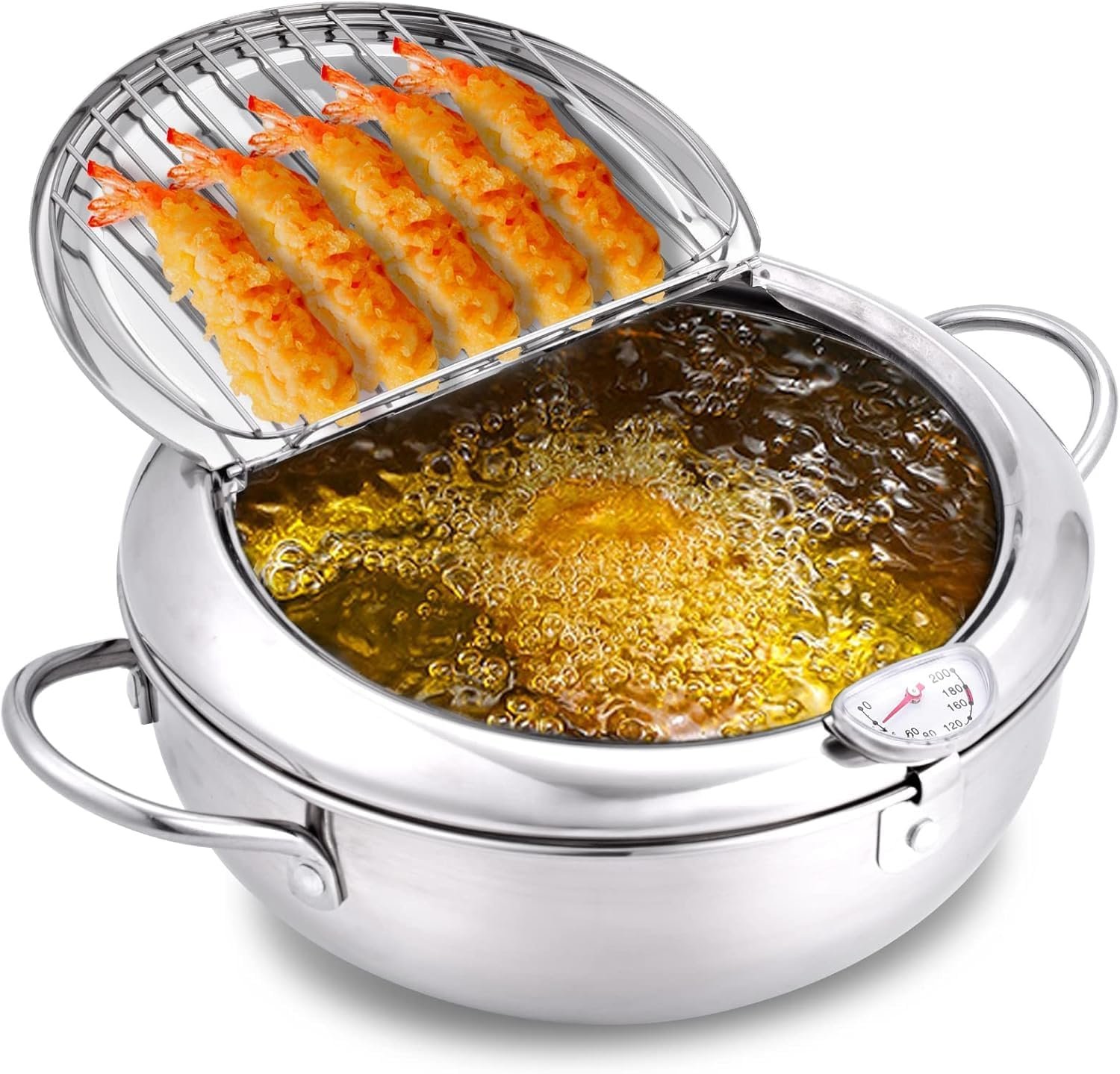
    The cuomaop Deep Fryer Pot, identified in the supplied Amazon listing as a 304 stainless steel Japanese frying pot with an oil-draining feature, temperature control, and a lid, belongs to this category. Its advertised uses include preparing tempura, French fries, chicken, and other foods that benefit from hot oil. The listing also identifies it as suitable for kitchen stoves and induction cookers, although buyers should confirm the precise compatibility instructions and operating limitations for their own cooking equipment.

    Understanding how this type of cookware works can help determine whether it fits a particular kitchen, cooking routine, and storage arrangement. A dedicated frying pot may offer a more contained alternative to a wide, uncovered saucepan, but it still requires careful temperature management and responsible handling of hot oil.

    This guide explains the advertised features of the cuomaop deep fryer pot, explores possible cooking applications, compares it with other common frying methods, and outlines the practical considerations that matter before using a stovetop deep-frying vessel.

    Key Features of the Cuomaop Deep Fryer Pot

    The product name highlights several features: 304 stainless steel construction, a Japanese-style frying-pot design, temperature control, a lid, and an oil-draining component. Each serves a different purpose, and understanding those differences is useful when deciding whether this type of cookware meets your needs.

    1. 304 Stainless Steel Construction

    The product is described as being made from 304 stainless steel. This grade of stainless steel is widely used in kitchen equipment because it offers useful corrosion resistance and is generally suitable for contact with food when manufactured and maintained appropriately.

    One practical advantage of stainless steel is that it does not rely on a conventional nonstick coating for its cooking surface. That can be appealing to people who prefer uncoated cookware or want to avoid managing the surface restrictions associated with certain coatings.

    Stainless steel is also relatively durable under ordinary kitchen conditions. It can tolerate regular washing and does not require the seasoning process associated with traditional cast iron cookware. Nevertheless, its long-term condition depends on how it is used, cleaned, and stored.

    It is important to distinguish between the advertised material and the construction of the complete pot. A product described as 304 stainless steel may have other components, such as a handle, lid knob, temperature indicator, or layered base, made from different materials. The supplied product name does not establish the precise composition of every component.

    Before using the pot, review the manufacturer’s care instructions and check whether any part has special temperature restrictions.

    2. Japanese-Style Deep-Frying Design

    Japanese-style frying pots are commonly associated with cooking methods such as tempura, where pieces of seafood or vegetables are dipped in batter and fried in hot oil. The general design emphasizes a dedicated vessel for frying rather than using a large pot intended for several unrelated cooking tasks.

    A purpose-designed frying pot can help keep the cooking area more organized. It provides a defined space for the oil and may incorporate features intended to assist with temperature monitoring, draining, or storing the pot between uses.

    The term “Japanese-style” describes the general product category and intended cooking applications. It should not automatically be interpreted as a guarantee that the pot was manufactured in Japan or that it follows a particular traditional design specification.

    The actual dimensions, depth, capacity, and internal shape are more useful when determining whether a pot will work for a particular recipe. The product name identifies a 9.4-inch size, but the exact measurement convention and usable oil capacity should be confirmed on the current listing. An outside diameter, for example, does not necessarily equal the usable interior width.

    3. Temperature Control and Monitoring

    Oil temperature is one of the most important factors in deep-frying.

    When oil is too cool, food can cook slowly and may absorb more oil than intended. When it is too hot, the exterior may brown rapidly before the center is fully cooked. Excessive heat also increases the risk of smoking and can create a serious fire hazard.

    The cuomaop product name refers to temperature control. That wording alone does not establish whether the pot uses a built-in thermometer, a temperature indicator, or another monitoring arrangement. It also does not prove that the cookware automatically regulates heat.

    This distinction matters because a stovetop frying pot generally depends on the stove setting and the cook’s adjustments unless the manufacturer specifically identifies an active temperature-regulation mechanism.

    If the pot includes a temperature indicator, use it according to the manufacturer’s instructions. A separate cooking thermometer can also help verify oil temperature, particularly when preparing recipes that require a relatively narrow temperature range.

    Common deep-frying temperatures vary by recipe, but approximately 325°F to 375°F (163°C to 191°C) covers many everyday frying applications. This is a general cooking range, not a product-specific temperature recommendation. Always follow the recipe and the cookware manufacturer’s stated operating limits.

    Temperature readings may also differ depending on where the thermometer measures the oil. Avoid assuming that a single reading represents the temperature throughout the entire pot, especially immediately after adding cold or frozen food.

    4. Oil-Draining Feature

    The advertised oil-draining feature is intended to make it easier to separate fried food from excess oil or to assist with handling oil after cooking, depending on the component’s design.

    Removing freshly fried food from the oil at the appropriate time is important for texture. Many fried foods benefit from a brief draining period before serving. A wire rack positioned over a suitable tray can help excess oil drip away while allowing steam to escape.

    Some frying-pot designs include a rack or integrated draining arrangement. However, the exact configuration of the cuomaop pot should be checked in the current product photographs and specifications rather than assumed from the product title alone.

    If the product includes a removable rack, make sure it is positioned securely before using it. The rack should be used only for the purpose and load described by the manufacturer. It should not be treated as a substitute for a properly sized utensil when removing food from hot oil.

    An oil-draining component also does not necessarily mean the pot can safely filter or store used cooking oil. Transferring hot oil requires separate precautions, and any included strainer or pouring feature should be used only as directed.

    5. Lid for Storage and Kitchen Use

    A lid can help keep dust and other contaminants away from cookware when it is not being used. Depending on its design, it may also help contain some splatter during appropriate stages of cooking.

    However, deep-frying requires special care when using a lid. Moisture trapped beneath a lid can condense and drip back into hot oil. Water contacting hot oil can cause sudden splattering, and closing a pot during active frying may interfere with moisture escaping from the food.

    For these reasons, do not assume the lid should remain closed while frying. Follow the manufacturer’s instructions for when the lid may be used, and keep the cooking area free of unnecessary moisture.

    The lid’s material and handle construction are also relevant. Metal and other heat-conducting components may become hot during cooking. Use suitable protection when handling any part that may have been exposed to heat, even if the handle appears cool.

    A lid is most useful when its intended purpose is clear. For example, a manufacturer may recommend it for covering the pot during storage after the cookware and oil have cooled. That is different from using a sealed lid while heating oil.

    6. Advertised Stovetop and Induction Compatibility

    The product name identifies the pot as suitable for a kitchen stove or induction cooker. Stovetop compatibility is a major consideration because different cooking surfaces transfer heat in different ways.

    Gas stoves heat cookware through a flame, while conventional electric and glass-ceramic radiant cooktops heat the pot through contact with a hot surface. Induction cooktops use a magnetic field to heat compatible cookware.

    For induction use, the base generally needs to be made from a suitable magnetic material. Stainless steel cookware is not automatically induction-compatible simply because it is stainless steel. Different stainless steel grades and base constructions behave differently.

    Before purchasing, check the current listing for an explicit induction-compatibility statement and any restrictions on cooktop type. If the manufacturer specifies a magnetic-base test, follow its guidance. A magnet that adheres firmly to the base can be a useful preliminary indication, although it does not replace the manufacturer’s compatibility information.

    The pot should also sit securely on the cooking surface. A vessel that is too small, unstable, or poorly matched to the burner can heat unevenly or create handling difficulties.

    How the Cuomaop Deep Fryer Pot Can Be Used

    A stovetop frying pot can support a variety of recipes, but the right technique depends on the food, the oil temperature, and the amount being prepared. The following examples explain common applications without assuming that the product has been tested with every recipe.

    Preparing Japanese-Style Tempura

    Tempura typically consists of vegetables, seafood, or other ingredients coated in a light batter and fried until the exterior becomes crisp.

    A dedicated frying pot may suit this cooking style because the oil is contained within a defined vessel and can be monitored during cooking. A suitable pot size also makes it easier to manage smaller portions without heating an unnecessarily large volume of oil.

    Begin by preparing and drying the ingredients. Excess surface moisture can cause hot oil to splatter. Prepare the batter according to the recipe, then heat the oil gradually to the recommended temperature.

    Cook in small batches rather than filling the pot with ingredients all at once. Adding too much food can lower the oil temperature sharply and make it difficult to maintain consistent results.

    Remove each batch with an appropriate utensil and allow excess oil to drain. Serve tempura soon after cooking when a crisp texture is desired.

    Making Homemade French Fries

    French fries are another common application for stovetop frying pots.

    The cooking method can vary according to the potato variety, thickness of the pieces, and desired texture. Some recipes use a two-stage frying process, while others rely on a single frying stage.

    For a two-stage method, the first stage cooks the potato more gently, and the second stage helps develop a crisp exterior. The precise temperatures and timing depend on the recipe and the size of the potato pieces.

    Regardless of the method, dry the potatoes thoroughly after washing or soaking them. Water and hot oil are a dangerous combination. If the recipe involves soaking cut potatoes, drain them and dry them carefully before they enter the oil.

    Add the potatoes in manageable batches. Avoid overcrowding the pot, and keep track of the oil temperature as each batch is introduced. When the fries reach the desired texture and color, remove them with a suitable utensil and drain them on a rack or absorbent material placed safely away from the burner.

    The 9.4-inch size named in the product title may be relevant for small household batches, but the actual capacity should be confirmed before planning portion sizes.

    Frying Chicken

    A stovetop frying pot may also be used for certain chicken recipes, including smaller pieces of breaded chicken, depending on the pot’s depth and usable capacity.

    Chicken requires particular attention because a browned exterior does not guarantee that the center has reached a safe temperature. Piece size, bone structure, coating thickness, and starting temperature all affect cooking time.

    Avoid placing wet or dripping chicken into hot oil. If the recipe uses a wet marinade, remove excess liquid and follow a suitable preparation method to reduce splattering.

    Fry in small batches, maintain an appropriate oil temperature, and avoid allowing the coating to darken before the inside is cooked. Use a food thermometer to check doneness. The USDA recommends an internal temperature of 165°F (74°C) for poultry, measured in the thickest part without touching bone.

    The pot should not be filled with so much chicken that pieces cannot be handled safely. If the recipe requires deep oil coverage for large portions, verify that the cookware’s dimensions and manufacturer-recommended fill level are appropriate.

    Cooking Fried Seafood

    Shrimp, fish pieces, and other seafood can be prepared in a deep-frying pot using suitable batter or breading.

    Seafood often cooks relatively quickly, so monitoring the oil and avoiding overcrowding are particularly important. Smaller portions can be easier to handle than a large batch, especially when the food is delicate or coated in a light batter.

    Choose a recipe appropriate to the seafood being prepared. Check the product’s freshness and storage requirements, and use clean utensils and separate preparation surfaces where needed to reduce cross-contamination.

    A draining rack can be useful for removing excess oil after cooking, if the included component is designed for that purpose. Allow seafood to drain briefly and serve promptly when crispness is important.

    Frying Vegetables and Small Snacks

    A dedicated frying pot may be useful for foods such as battered zucchini, onion rings, mushrooms, vegetable fritters, and selected frozen snacks.

    Different foods release different amounts of moisture, and frozen items may cause more splattering or a sharper temperature drop than dry ingredients. Follow package directions for frozen products and never add food that is covered with loose ice crystals or excess surface water.

    For homemade vegetable fritters, ensure that the pieces are of a reasonably consistent size so they cook at a similar rate. For battered vegetables, allow excess batter to drip off before adding each piece to the oil.

    Use a slotted utensil designed for hot oil, and keep the handle positioned so it cannot be knocked against the pot or burner.

    Reheating Certain Fried Foods

    Some fried foods can be reheated in hot oil, although this is not always the most convenient method. An oven, toaster oven, or air fryer may be preferable when the goal is to restore crispness with less oil handling.

    If using a frying pot for reheating, confirm that the food is suitable for this method and that it can be submerged or handled safely. Avoid reheating foods with excessive water, sauce, or ice on their surfaces.

    This use is best treated as an occasional cooking option rather than a reason to heat a large quantity of oil for a very small portion.

    A Practical Guide to Using a Stovetop Deep-Frying Pot

    Safe and consistent results depend on a sequence of small decisions rather than on cookware alone.

    Step 1: Check the Cookware Before Heating

    Before each use, inspect the pot, handles, lid, temperature indicator, and any draining component. Look for loose fittings, visible damage, deformation, or other signs that could affect safe handling.

    Place the pot on a stable, level cooking surface. Make sure the handle does not extend into a walkway or sit where someone might accidentally knock it.

    If using induction, confirm that the pot is compatible with the specific cooktop. Follow any restrictions regarding burner size or power settings.

    Step 2: Add Oil Carefully

    Use an oil appropriate for deep-frying and the intended cooking temperature. Different oils have different smoke points and flavor characteristics. The smoke point is not the same as the ideal cooking temperature, and it should not be treated as a target for frying.

    Never fill the pot to the rim. Food displaces oil when it is added, and vigorous bubbling can cause overflow if there is insufficient headroom. Follow the manufacturer’s maximum fill recommendation if one is provided.

    If the product listing does not clearly state the safe oil capacity, avoid estimating it from the outside diameter alone.

    Step 3: Heat Gradually

    Start with a moderate heat setting and allow the oil to warm progressively. Sudden, excessive heating can make temperature control more difficult.

    Use the included temperature-monitoring feature as instructed, if present. A separate thermometer may be useful for checking the reading and observing temperature changes after food is added.

    Never leave heating oil unattended. If the oil begins to smoke, turn off the heat if it is safe to do so and allow the oil to cool. Do not continue cooking simply because the food is not ready.

    Step 4: Prepare Food Before It Reaches the Oil

    Organize the ingredients, utensils, draining surface, and serving dishes before frying begins. This reduces the need to search for equipment while handling hot oil.

    Pat ingredients dry where appropriate. Remove excess ice, water, or loose coating. Keep children and pets away from the cooking area, and avoid wearing loose clothing that could contact the burner or hot pot.

    Step 5: Cook in Manageable Batches

    Introduce food gently rather than dropping it from a height. Lowering food carefully reduces splashing and gives the cook more control.

    Avoid overcrowding. A smaller batch is often easier to manage and allows the oil to recover its temperature more effectively.

    Use the temperature range specified by the recipe, and adjust the heat as necessary. Remember that food continues to cook after removal, so timing and color should be considered together with the recipe’s safety requirements.

    Step 6: Remove Food Safely

    Use suitable tongs, a slotted spoon, or another utensil designed for the food being prepared. Do not reach into the pot or attempt to catch falling food by hand.

    Allow excess oil to drain in a stable, heat-resistant area. Keep the draining surface away from children, pets, and the edge of the counter.

    If the pot has an integrated draining rack, check how it is meant to be positioned and whether it is intended to support food, oil, or both.

    Step 7: Cool the Oil Before Handling It

    Turn off the heat when frying is finished. Let the pot and oil cool in a safe location where they cannot be bumped or reached by children.

    Do not carry a pot full of hot oil across the kitchen unless absolutely necessary. Moving hot oil increases the risk of spills and burns.

    Never pour hot oil into a sink or toilet. Once it has cooled sufficiently, strain and store it only if the oil remains suitable for reuse and the storage method is appropriate. Discard oil that smells rancid, has developed persistent foam, or shows other signs of deterioration. Follow local waste-disposal guidance.

    Who May Find This Type of Frying Pot Suitable?

    The cuomaop deep fryer pot may be worth considering for several kinds of household cooks, provided its actual specifications match their needs.

    Home Cooks Who Fry Occasionally

    People who prepare tempura, fries, or other fried foods from time to time may prefer a dedicated stovetop vessel rather than a full-size electric appliance.

    A stovetop pot can be stored with ordinary cookware when not in use, although the actual storage footprint depends on the handle, lid, and included accessories.

    Occasional users should consider whether the pot’s capacity suits their typical portions. A smaller vessel may be practical for limited quantities but less convenient when preparing food for a large group.

    People Interested in Japanese Cooking

    Home cooks exploring Japanese dishes may appreciate cookware designed around tempura and similar frying techniques.

    The pot can potentially be incorporated into a broader cooking setup that includes a thermometer, suitable frying utensils, a draining rack, and serving dishes.

    However, specialized cookware does not replace technique. Ingredient preparation, batter consistency, oil temperature, and batch size remain important factors in producing the intended result.

    Kitchens With Compatible Induction or Other Stovetops

    The advertised compatibility with stoves and induction cookers may make the product relevant to households using different cooking surfaces.

    Compatibility should still be confirmed for the actual appliance. Buyers should also consider whether the pot’s base size is appropriate for their burner and whether the handle and lid are suitable for their cooking habits.

    People Who Prefer Uncoated Cookware

    Some cooks prefer stainless steel because it does not depend on a traditional nonstick coating across the cooking surface.

    That preference may be relevant when choosing a deep-frying pot, although the precise material composition of each component should be checked. Uncoated stainless steel also has its own care requirements and can discolor or develop deposits under certain conditions.

    Cooks With Limited Storage Space

    A stovetop pot may be easier to store than a countertop appliance with a separate heating element, power cord, and oil container.

    Nevertheless, a pot with a long handle, removable rack, and lid still needs suitable storage space. Measure the available cupboard or drawer before purchasing if space is limited.

    Households That Need Large Portions

    A compact frying pot may be less suitable for people who regularly prepare large quantities of food in one session. Cooking many small batches can take time and requires repeated temperature adjustments.

    For frequent large-batch frying, a larger vessel or a dedicated electric fryer with a clearly specified capacity may be more convenient. The right choice depends on serving sizes, cooking frequency, kitchen space, and comfort with handling hot oil.

    Important Things to Consider Before Purchasing

    A product’s title provides a starting point, but it does not answer every question about suitability. These details are worth checking in the current Amazon listing or the manufacturer’s documentation.

    Confirm the Exact Dimensions

    The product name references a 9.4-inch pot. Confirm whether this measurement refers to the rim diameter, exterior width, or another dimension.

    Also look for the pot’s depth, total capacity, recommended oil level, and overall dimensions with the handle attached. These measurements influence how much food can be prepared and whether the pot will fit on the intended burner.

    Do not assume that a stated diameter tells you how many servings the pot can handle.

    Check the Induction Requirements

    Although the product name mentions induction cookers, it is still sensible to verify the manufacturer’s compatibility information.

    Induction cooktops may have minimum cookware-size requirements and can behave differently when the pot base is smaller than the active heating zone. Use a stable cooking surface and follow the cooktop manufacturer’s guidance.

    For gas or radiant electric stoves, make sure the pot is appropriate for the burner and does not sit in an unstable position.

    Understand What “Temperature Control” Means

    Determine whether the product includes a thermometer, a visual temperature indicator, or a genuine mechanism for adjusting heat automatically.

    A temperature indicator helps the cook monitor oil conditions, but it does not necessarily control the heat. Unless the manufacturer explicitly states otherwise, assume that you will need to manage the stove setting yourself.

    Look for information about the temperature range, measurement units, reading location, and any limitations on the indicator’s accuracy.

    Verify the Oil-Draining Arrangement

    Review the current listing photographs to understand exactly what is included.

    Check whether the draining feature is a removable rack, a basket, a pouring spout, or another component. These designs serve different purposes, and the product title alone may not fully explain how the feature works.

    Also confirm whether the component is removable for cleaning and whether it has any load or temperature restrictions.

    Check the Lid’s Intended Use

    A lid may be useful for covering the pot during storage, but not every lid is designed to remain on the cookware while food is frying.

    Look for specific instructions about whether the lid can be used during heating, whether it has a vent, and how to handle it safely. Avoid sealing in moisture over hot oil.

    Consider the Weight and Handle Design

    The pot’s weight matters when it contains oil. Even a manageable empty vessel can become difficult to handle when filled with hot liquid.

    Inspect the handle design and mounting method in the product photographs. Consider whether the grip appears practical for your hand size and whether the handle could become hot during normal use.

    Do not lift or pour a pot of hot oil merely to test its balance. Follow the manufacturer’s handling instructions and use a safe, stable location for draining or cooling.

    Review Cleaning and Maintenance Instructions

    Stainless steel is generally durable, but its appearance and condition can be affected by prolonged exposure to heat, mineral deposits, and unsuitable cleaning products.

    Check whether the pot, lid, and any temperature indicator can be washed in a dishwasher or must be cleaned by hand. Do not assume every component is dishwasher-safe just because the main vessel is stainless steel.

    Allow the cookware to cool before washing. Introducing cold water to extremely hot metal can create thermal stress, while washing a hot pot can expose you to burns and splashes.

    Use cleaning products suitable for the materials involved, and dry the pot thoroughly before storing it.

    Account for Oil Costs and Disposal

    Deep-frying requires oil, and the quantity depends on the pot’s capacity and the food being prepared. A dedicated frying pot does not necessarily use less oil than every alternative.

    Oil may sometimes be strained and reused, but reuse depends on the type of food, frying temperature, length of use, and the condition of the oil. Strong flavors, burnt crumbs, excessive foaming, and rancid odors are reasons to discard it.

    Plan for safe cooling, storage, and disposal before beginning. Never pour used cooking oil down a drain, where it can contribute to blockages.

    Keep Fire Safety in Mind

    Hot cooking oil can ignite if it overheats. Never leave a pot of heating oil unattended, and keep combustible materials away from the stove.

    If cooking oil catches fire, do not use water. Water can cause burning oil to spread violently. Turn off the heat only if it is safe to do so, and cover the fire with a suitable metal lid or use an appropriately rated Class K or other locally applicable cooking-oil fire extinguisher. Do not move the burning pot.

    If the fire cannot be controlled immediately and safely, evacuate and contact emergency services.

    These precautions apply to all stovetop deep-frying cookware, not just this particular model.

    Comparison With Other Common Frying Methods

    The cuomaop pot belongs to a broader group of cookware and appliances used for frying. Each category has different strengths and limitations.

    Stovetop Deep-Frying Pots

    A stovetop pot uses heat from the cooktop and typically relies on the cook to manage oil temperature.

    This category can be suitable for people who want a dedicated frying vessel without adding another powered appliance to the kitchen. It may also be convenient for recipes requiring a relatively small amount of food.

    The main limitation is that temperature control and safe handling require active attention. A built-in indicator, if included, can help, but the cook still needs to monitor the oil and adjust the heat unless the product specifically provides automatic regulation.

    Conventional Saucepan or Deep Pot

    A regular saucepan or deep pot can also be used for some deep-frying tasks if it is suitable for the temperature, has adequate depth, and remains stable on the burner.

    This approach reduces the need for specialized cookware and can make sense for people who fry only occasionally.

    However, an ordinary pot may not include a dedicated temperature indicator or draining feature. Its shape and handle arrangement may also be less convenient for frying. Never use a shallow or unstable pan for deep-frying simply because it is readily available.

    Electric Deep Fryers

    An electric deep fryer typically combines a heating element, an oil container, and temperature controls in a single appliance. Many models also include a basket or a mechanism intended to help manage the food.

    Depending on the design, an electric fryer may maintain a selected temperature more consistently than a basic stovetop pot. It can be convenient for households that deep-fry frequently.

    The trade-offs include storage space, electrical requirements, cleaning considerations, and the need to maintain a separate appliance. Features vary considerably, so automatic temperature regulation should be verified rather than assumed for every model.

    Air Fryers

    An air fryer cooks by circulating hot air around food, usually with little or no added oil compared with traditional deep-frying.

    It can be convenient for reheating and preparing foods that benefit from a crisp exterior. It also avoids keeping a pot of hot cooking oil on the stove.

    However, air frying is not identical to immersion frying. Batter-based tempura and some traditional fried recipes may require substantial adaptation to work well in an air fryer. Texture, moisture, and browning can differ from foods cooked in hot oil.

    Woks and Wide Frying Pans

    A wok or wide frying pan is useful for stir-frying and shallow-frying, and certain designs can accommodate limited amounts of deep-frying when used appropriately.

    These vessels offer flexibility for several cooking methods, but a wide opening may expose a larger area of hot oil and can make splashes more likely. A shallow pan also leaves less room for oil displacement when food is added.

    For deep-frying, vessel depth, stability, and the manufacturer’s guidance matter more than whether a pan is marketed for general cooking.

    Choosing Between the Categories

    The most appropriate option depends on how often you fry, the foods you prepare, your cooktop, and how much space you have available.

    A stovetop frying pot may suit occasional batches of tempura, fries, or similar foods. An electric fryer may be more convenient for regular frying with dedicated controls. An air fryer may be preferable when minimizing added oil is a priority, while an ordinary pot may be sufficient for cooks who want to avoid adding specialized equipment.

    There is no single design that is ideal for every household. The goal is to choose cookware that matches the intended cooking method and can be used safely and comfortably.

    Frequently Asked Questions

    Is the cuomaop deep fryer pot made from 304 stainless steel?

    The supplied product title identifies it as a 304 stainless steel frying pot. To confirm the exact material composition, including the base, handles, lid, and other accessories, check the current product listing or manufacturer documentation.

    Can this pot be used on an induction cooker?

    The product name advertises compatibility with induction cookers. Before use, verify the manufacturer’s instructions for your specific cooktop and confirm that the pot’s base is compatible with induction heating.

    Not every stainless steel pot works on induction, so material labeling alone is not sufficient.

    Does the pot automatically control the oil temperature?

    The product name mentions temperature control, but that wording does not establish whether the pot automatically regulates heat.

    Check the listing to determine whether the feature is a thermometer, a temperature indicator, or an automatic control mechanism. If the pot relies on a manual stovetop setting, the cook will need to monitor the oil and adjust the heat as necessary.

    What foods can be prepared in a Japanese-style frying pot?

    Depending on the pot’s dimensions and the manufacturer’s instructions, it may be suitable for tempura, French fries, chicken pieces, breaded seafood, battered vegetables, and similar foods.

    The appropriate batch size and oil depth depend on the actual capacity and the requirements of each recipe.

    Is a 9.4-inch frying pot large enough for a family?

    That depends on the number of people being served, the size of the food pieces, and the pot’s usable capacity. The listed diameter alone does not establish how much food can be cooked safely in one batch.

    Check the interior dimensions and recommended oil fill level, then compare those measurements with your typical portion sizes.

    Can the lid stay on while the food is frying?

    Do not assume that it can. Follow the manufacturer’s instructions for the lid’s intended use.

    Moisture can collect beneath a lid and drip into hot oil, potentially causing splattering. A lid designed for storage or covering the pot after cooking may not be appropriate during active frying.

    How can oil temperature be monitored?

    If the pot includes a temperature indicator, use it according to the manufacturer’s instructions. A separate cooking thermometer can provide another way to check the oil.

    Follow the recipe’s recommended temperature and monitor changes after adding food. Avoid heating oil until it smokes.

    Can cooking oil be reused after frying?

    Oil may be reusable when it has been used appropriately and remains in good condition. Allow it to cool, then strain it if the oil is suitable for reuse and the storage method is safe.

    Discard oil that smells rancid, develops persistent foam, or shows other signs of deterioration. Oil used for heavily breaded or strongly flavored foods may become unsuitable sooner.

    Is stainless steel cookware easy to clean?

    Stainless steel is generally practical to maintain, but cleaning requirements depend on the design and the manufacturer’s instructions. Allow the pot to cool before washing, remove oil and food residue safely, and dry it before storage.

    Check whether the lid, thermometer, and other components have separate cleaning requirements. Do not assume the complete product is dishwasher-safe.

    Is a stovetop frying pot better than an electric deep fryer?

    The answer depends on the cooking routine. A stovetop pot may be appealing to people who prefer conventional cookware and want to avoid storing another electrical appliance.

    An electric fryer may offer more integrated controls or a dedicated basket, depending on the model. Compare capacity, temperature management, cleaning, storage, and safety features before choosing between them.

    Does a draining feature remove all the oil from fried food?

    No. A draining rack or similar component can help excess surface oil drip away, but it cannot remove all the oil associated with a fried food. The final result also depends on the recipe, cooking conditions, and draining method.

    What should be checked before the first use?

    Review the manufacturer’s instructions, verify cooktop compatibility, inspect all components, and understand the recommended oil capacity and temperature limits. Clean the cookware as directed before preparing food.

    It is also sensible to prepare a stable draining area and ensure that children, pets, and combustible items are kept away from the cooking zone.

    Conclusion

    The cuomaop Deep Fryer Pot is presented as a Japanese-style stovetop frying vessel featuring 304 stainless steel construction, a temperature-related feature, a lid, and an oil-draining arrangement. Its advertised applications include tempura, French fries, chicken, and other foods commonly prepared through immersion frying.

    For households that prefer stovetop cookware, a dedicated frying pot can provide a defined vessel for these recipes without requiring a separate electric fryer. The usefulness of its individual features, however, depends on the exact construction, dimensions, capacity, and instructions supplied by the manufacturer.

    Before making a decision, confirm the meaning of the advertised temperature control, the design of the draining feature, the lid’s intended use, and compatibility with your cooktop. The listed 9.4-inch size should also be considered alongside the pot’s depth and recommended oil fill level rather than used as the sole measure of capacity.

    Safe frying practices remain essential regardless of the cookware selected. Dry ingredients appropriately, avoid overcrowding, monitor the oil, keep the pot stable, and allow used oil to cool before handling it. Never leave heating oil unattended, and never use water to extinguish an oil fire.

    If the dimensions and features match your kitchen setup, this style of pot may be a practical option for preparing occasional batches of tempura, fries, and other fried foods.

    You can check more details on Amazon here

    As an Amazon Associate, we earn from qualifying purchases.